
Anyone who has travelled a bit will tell you this: beer never tastes quite the same in
two different countries. Even when the style is familiar. Even when the ingredients
look identical on paper.
And when it comes to Irish craft beer, that difference is unmistakable.
Visitors often ask why beer tastes different in Ireland. Is it the water? The weather?
The brewing traditions? The pub culture? The short answer is yes. The longer
answer is far more interesting.
If you’re one of the many beer lovers Ireland attracts each year, understanding what
shapes flavour here adds a whole new layer to the experience.
Let’s break it down!
It sounds romantic to say water shapes flavour. In Ireland, it’s also true.
Beer is over 90% water, so mineral composition has a direct influence on mouthfeel
and balance. Different regions naturally contain varying levels of calcium,
magnesium and bicarbonates, which affect how hops and malt express themselves.
Historically, Dublin’s water has been relatively high in bicarbonates. That chemistry
suited darker beers, which is one reason stout became so strongly associated with
the city. Roasted malts balance higher alkalinity well. This isn’t marketing folklore; it’s
widely documented in brewing science and Irish brewing heritage!
Modern Irish breweries can treat and adjust water profiles, of course. But the
tradition remains part of the DNA. It shaped early recipes. It influenced style
development. And that legacy still echoes in Irish craft beer today.
Ireland brewing heritage stretches back centuries. Commercial brewing was firmly
established in Dublin by the 18th century. The Guinness brewery at St. James’s Gate
was founded in 1759, and porter became a defining Irish export style in the 19th
century.
While the 20th century saw consolidation and fewer independent breweries, the craft
beer revival in Ireland began gaining momentum in the 1990s and expanded
significantly in the 2010s. Today, Irish breweries operate across the country, from
urban centres to rural towns, producing everything from traditional stouts to modern
hazy IPAs.
What makes Irish craft beer distinct is that many brewers respect that historical
backbone while experimenting boldly. You’ll often find traditional styles sitting
comfortably alongside American-inspired hop-forward beers. There’s confidence there. A sense of continuity.
And when you taste it, you notice.
Ireland’s climate plays its part too. The temperate maritime weather supports barley
cultivation, and Irish barley has long been a key ingredient in both brewing and
distilling.
While hops are often imported, there has been increasing interest in growing hops in
Ireland in recent years. Even when imported varieties are used, local water, local
yeast management and local brewing conditions influence the final profile.
Freshness matters as well. Beer served close to where it’s brewed tends to retain
more of its intended flavour characteristics. When you taste Irish craft beer at the
source, especially on guided visits to Irish breweries, you’re experiencing it as the
brewer intended.
That immediacy can’t be shipped overseas.
Here’s something that doesn’t show up on ingredient lists: atmosphere.
Beer tastes different in Ireland partly because you’re drinking it in Ireland.
Pub culture remains central to Irish social life. Conversation flows easily. Pints are
poured with care. There’s an unspoken etiquette to how beer is served and enjoyed.
For beer lovers Ireland welcomes from abroad, this context amplifies flavour. The
setting shapes perception. A well-poured stout in a relaxed pub, after a day
exploring, simply hits differently.
It’s not just romanticism. Sensory studies consistently show that environment affects
how we perceive taste. Lighting, sound, company and expectation all play a role.
So yes, the beer itself is distinctive. But the experience around it elevates it further.
Over the past decade, craft beer tourism Ireland has grown steadily. Travellers now
build entire trips around visiting independent producers, tasting limited releases and
understanding regional brewing identities.
This shift has encouraged breweries to open their doors more intentionally. Guided
tours explain not just process but philosophy. Why that hop? Why that malt bill? Why
that style?
On thoughtfully designed craft beer tourism Ireland experiences, the conversation
often expands beyond beer into farming, sustainability and regional culture.
That’s where operators like Brewery Hops come in.
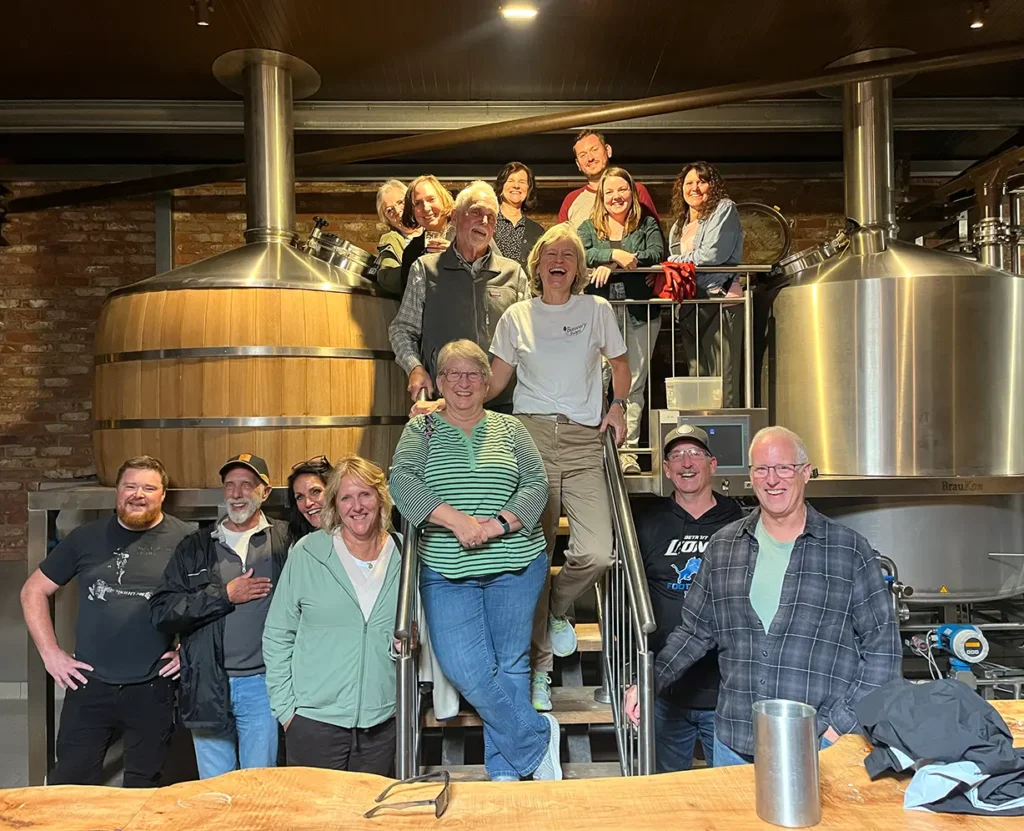
Rather than treating tastings as isolated stops, Brewery Hops curates small group
experiences that connect Irish breweries with food, landscape and history. Founder
Mia, born and raised in Ireland, brings personal context to each visit. Her approach
isn’t scripted. It’s conversational!
Guests aren’t rushed through production floors. They’re encouraged to ask
questions, compare notes and really consider what they’re tasting. And yes, there’s
usually a bit of laughter along the way!
When someone explains why a particular stout works with local water chemistry, or
how a brewer drew inspiration from a historic Irish style, the flavour suddenly makes
more sense.
If you’re serious about flavour, Ireland offers something distinctive.
There’s a balance here between tradition and experimentation. Irish craft beer
doesn’t try to mimic larger markets. It builds from its own base. Roasted malts
remain strong. Balanced bitterness is common. Even modern IPAs often carry a
softer profile than some aggressively hopped counterparts elsewhere.
For beer lovers Ireland appeals to, this nuance is refreshing.
You’re not chasing extremes. You’re exploring interpretation.
And because many Irish breweries remain independently owned, there’s space for
personality. Recipes reflect individual choices rather than corporate uniformity.
One of the most overlooked reasons why beer tastes different in Ireland is narrative.
When you understand where something comes from, you taste it differently. Hearing
a brewer describe experimenting with local barley. Learning about regional water
profiles. Understanding Ireland brewing heritage in context.
It all feeds into perception.
That’s why visiting Irish breweries in person often changes how people evaluate
flavour. It becomes layered. Textured. Memorable.
A stout isn’t just dark and roasted. It’s connected to Dublin’s brewing history. A pale
ale isn’t just citrusy. It reflects a new generation of Irish brewers confident in their
craft.
That depends on your perspective.
Objectively, Irish craft beer reflects specific environmental, historical and cultural
factors. Water chemistry, barley production, brewing heritage and pub culture all
contribute to why beer tastes different in Ireland.
Subjectively? Many visitors would argue yes.
When you combine well-made beer with context, conversation and setting, flavour
deepens.
And that’s exactly why craft beer tourism Ireland continues to grow. It’s not about
collecting pints. It’s about understanding them.
For travellers planning a specialised trip, especially those curious about Irish
breweries and local food culture, booking a small group experience with a
knowledgeable guide like Mia at Brewery Hops turns tasting into something far richer
than expected.
You don’t just drink the beer.
You understand it.
And once you’ve done that, it’s very hard to go back to drinking it any other way!